Palasnath Temple, located around 120 km from Pune, is a unique seasonal destination situated in the backwaters of Ujjani Dam on the Bhima River, near Ujjani village in Madha Tehsil, Solapur district.
What makes this temple special is that it remains submerged underwater for most of the year due to the dam reservoir. The temple becomes accessible only during summer months or in periods of severe drought, when water levels drop significantly.
Palasnath Temple is ideal for travelers looking for offbeat places near Pune and rare, time-sensitive experiences.
Ancient Palasnath(Palasdeo) Temple
How to reach Palasnath Temple from Pune?
Drive through Solapur Highway - Cross Bhigwan - After a few kms, there is Palasdev village arch on left - Take a left in Village - Follow the road and park your vehicle. You may have to take a small boat ride to cross the backwater and Boats are available when the temple is accessible.
Drive through Solapur Highway - Cross Bhigwan - Cross Dalaj (both No. 1 and No. 2) - Reach to Kalewadi No. 1 and take left - drive through backwater towards temple.
This route is preferred during May when there is no water in the dam in this area. But before driving through this area please check if it is completely dry.
The temple is dedicated to lord Shiva as Palasnath and it is situated near Palasdeo village. The temple has 1000-year-old history and its a masterpiece of architectural style. This ancient structure created in a Hemadpanthi style in 11th century, was built by Chalukya Kings. The temple has beautiful stone carvings and temple structure is very similar to Kopeshwar temple at Khidrapur, Sangameshwar temple and Bhuleshwar temple near Pune.
The temple is west facing and there is Lord Hanuman idol kept at the entrance of main temple (Garbhgruh - inner room where the idol is kept).
Lord Hanuman
Way to enter Mandap
Palasnath Temple
There is no Shivpindi(Shivlinga idol) in the temple, it was relocated in the village and new temple was built there during Ujjani Dam construction.
Entrance of Garbhgruh
Garbhgruh
As per the pillar structure, temple was built under Yadav era.
Pillar
Pillars
Carving on the pillar
You can see the beautiful carving on the walls.
Carving on the wall
Ceiling
Due to the water of the dam, the temple has been damaged a lot but still this temple in the water looks very attractive. If you look closely, you can see that the temple has been renovated during different times, during any of the renovation the 'Sharbh Shilp' sculpture made in limestone is placed there.
The kalasa of the temple is also seen to have been renovated and newly built and so looks different than base temple.
Sharbh Shilp
Kalas
Palasnath temple is known for its serene ambiance and intricate carvings. This temple is also mentioned in Dnyaneshwari, is a commentary on the Bhagavad Gita written by the Sant Dnyaneshwar in 1290.
The backwaters of Ujjain Dam is also famous for bird watching, it is home to various migratory birds such as the Greater Flamingo, Eurasian Spoonbill, Bar Headed Goose, Collared Pratincole, and the Osprey, bird of prey. Bhigwan is also home to the many birds, one can find more than 230 species of birds here.
We took blessing of Siddhivinayak from Siddhetek village. It is third Ganapati from Ashtavinayak. After darshan we had lunch at Siddhivinayk hotel, its a small shack in which they serve you maharatrian thali which includes Pithale, Bhakri, Batata Rassa, Thecha, Pickle and Dal Rice at Rs.150. Food was very tasty. There are many such hotel close to bank of Bhima river, and all of those nearly serve same menu.
Bhuleshwar Temple is an ancient shrine dedicated to Lord Shiva, located near Malshiras in Maharashtra, about 55 km from Pune. Perched atop a small hill, this offbeat and lesser-known temple offers a perfect blend of history, mythology, and architectural beauty. Surrounded by peaceful countryside, the temple provides a serene atmosphere that is quite different from the crowded religious destinations commonly found around Pune.
Bhuleshwar holds both mythological and historical significance. Historians believe that the site originally formed part of a fortification known as Mangalgad, which may have been constructed to monitor the surrounding region and protect important routes. Its strategic hilltop location suggests that it served both religious and defensive purposes.
There is also evidence that the temple underwent reconstruction in later years. According to local traditions and historical records, parts of the original structure were damaged during periods of conflict, following which the Marathas restored and renovated portions of the temple in the 17th century. As a result, the monument seen today reflects a fascinating blend of architectural influences from different eras.
A visit to Bhuleshwar is not just about seeking blessings; it is also an opportunity to admire centuries-old art, explore a lesser-known historical landmark, and enjoy panoramic views of the surrounding landscape. Its unique combination of spirituality, history, and tranquility makes it a hidden gem for travelers looking to venture beyond the usual tourist trail.
Bhuleshwar Temple near Pune
This was my second visit to Bhuleshwar Temple, the first being in June 2019. Having fond memories of my earlier trip, I was excited to revisit this historic shrine and experience its unique charm once again. Unlike a carefully planned outing, this visit was completely spontaneous, making it even more enjoyable.
We decided on the trip at the last minute and set off from Pune at around 2:00 PM. After about two hours on the road, we reached Bhuleshwar Temple at around 4:00 PM. As the temple gradually came into view atop the hill, its fort-like appearance and ancient stone architecture immediately rekindled memories of my previous visit. Despite having seen it before, the beauty, serenity, and historical aura of the place felt just as captivating as ever.
Sometimes, the best journeys are the unplanned ones, and this impromptu visit to Bhuleshwar Temple turned out to be a perfect blend of history, spirituality, and a refreshing escape from the city's routine.
We followed below route -
Pune - Hadapsar - Loni Kalbhor - Urali Kanchan - Yavat (Right turn to Bhuleshwar) - Bhuleshwar Temple
Entrance
Heavy Brass Bell at entrance
The moment I caught my first glimpse of the temple, I was awestruck by its grand and magnificent architecture. The sight of the ancient stone structure standing majestically atop the hill instantly captured my attention. Its intricate carvings, fort-like appearance, and timeless beauty made for a truly unforgettable first impression. Despite this being my second visit, the temple's charm remained undiminished, and I found myself admiring it with the same sense of wonder and excitement as I had during my first trip.
Bhuleshwar Shiva Temple is renowned for its extraordinary architecture and exquisite craftsmanship. Richly adorned with sculptures, carvings, and beautifully sculpted idols, the temple is a masterpiece of medieval Indian art. Intricate stone carvings decorate its walls, pillars, and ceilings, showcasing the remarkable skills of the artisans who created them centuries ago. Every corner of the temple reveals fine details that leave visitors spellbound and invite them to pause and admire the artistry.
What makes Bhuleshwar truly special is that every sculpture seems to tell a story. From depictions of gods and goddesses to scenes from mythology and everyday life, the carvings offer a fascinating glimpse into the culture, beliefs, and traditions of the time. As you walk through the temple, it feels like stepping into an open-air gallery where history, spirituality, and art come together in perfect harmony.
Despite the passage of centuries, the beauty and elegance of this exquisitely decorated monument remain remarkably intact. Whether you are a devotee, a history enthusiast, a photographer, or simply someone who appreciates fine architecture, Bhuleshwar Temple promises an experience that is both inspiring and unforgettable.
Pillar
The temple is primarily constructed from black basalt stone, a durable volcanic rock that has helped preserve its grandeur for centuries. The original structure beautifully showcases the distinctive architectural elements of medieval temple design, with each section reflecting exceptional craftsmanship and artistic detail. From intricately carved pillars and ornate ceilings to finely sculpted walls, every part of the temple highlights the remarkable skills of the artisans who built it.
One of the most striking aspects of Bhuleshwar Temple is its tranquil atmosphere. The thick basalt stone walls help keep the interiors naturally cool, creating a soothing and peaceful environment even during the peak summer months. As you step inside, the hustle and bustle of the outside world seem to fade away, replaced by a sense of calm and spiritual serenity. Combined with its magnificent architecture and rich history, this serene ambience makes Bhuleshwar Temple a truly memorable place to visit.
Entrance to the main temple
At the heart of the temple's sanctum sanctorum (garbhagriha) lies the sacred Shivalinga, the principal object of worship and a symbol of Lord Shiva's divine presence. Facing the Shivalinga is the majestic Nandi Bull, Lord Shiva's faithful vehicle and devoted gatekeeper. Carved with remarkable craftsmanship, Nandi sits in a posture of eternal reverence, seemingly keeping a constant watch over the deity.
The alignment of Nandi and the Shivalinga follows a traditional temple layout found in many Shiva temples, creating a deeply spiritual and serene atmosphere. As sunlight filters through the ancient stone structure and illuminates the sanctum, the sight of the sacred Shivalinga and the imposing Nandi evokes a sense of peace, devotion, and timelessness. The simplicity of the shrine, combined with the temple's intricate architecture, makes it one of the most captivating parts of Bhuleshwar Temple.
Standing in this sacred space, surrounded by centuries-old stone carvings and profound silence, one cannot help but feel connected to the rich spiritual heritage that has been preserved here for generations.
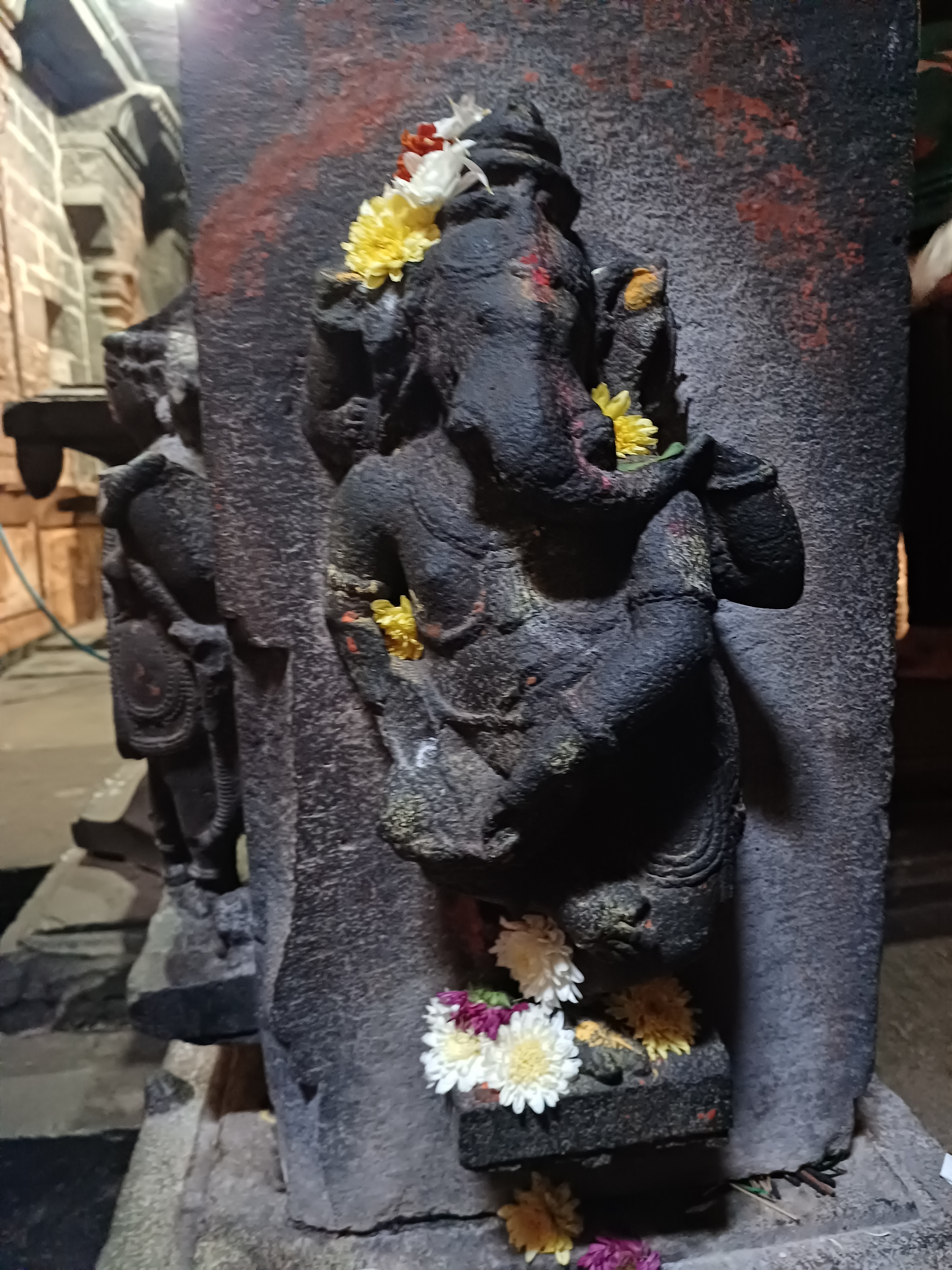
The temple also houses idols of Goddess Lakshmi and Lord Vishnu. Bhuleshwar Temple has an idol of Ganesha, too, in female attire. It’s known as Ganeshwari, Lambodari or Ganeshyani.
The temple complex also houses beautifully crafted idols of Goddess Lakshmi and Lord Vishnu, reflecting the rich spiritual and artistic heritage of Bhuleshwar. Among its many unique features is a rare and fascinating depiction of Lord Ganesha in female attire, a form seldom seen in Hindu temples. This distinctive idol is known by names such as Ganeshwari, Lambodari, and Ganeshyani.
The presence of this unusual representation has attracted the interest of devotees, historians, and art enthusiasts alike. It highlights the temple's rich symbolism and the creative expression of the artisans who adorned the monument centuries ago.
As you explore the temple's intricately carved halls and shrines, discoveries like these reveal that Bhuleshwar is much more than a place of worship.
Window
Carvings at Pradakshina Path
Bhuleshwar Temple is undoubtedly one of the most beautiful and architecturally fascinating temples in Maharashtra. Its intricate stone carvings, rich history, unique sculptures, and serene hilltop setting make it a hidden gem for travelers, history enthusiasts, and devotees alike. The temple offers a perfect blend of spirituality, heritage, and art, making it a rewarding destination for a short getaway from Pune.
For those with additional time on hand, a visit to the Mayureshwar Wildlife Sanctuary, located about 25 km from Bhuleshwar, can be a wonderful addition to the itinerary. Known for its grasslands, diverse birdlife, and the Indian gazelle (chinkara), the sanctuary is a delight for nature lovers. Unfortunately, due to time constraints, we had to give it a miss on this trip.
As the evening approached, we began our return journey. Instead of retracing our route, we drove back via Saswad, enjoying the pleasant countryside views along the way. We finally reached home at around 7:30 PM.